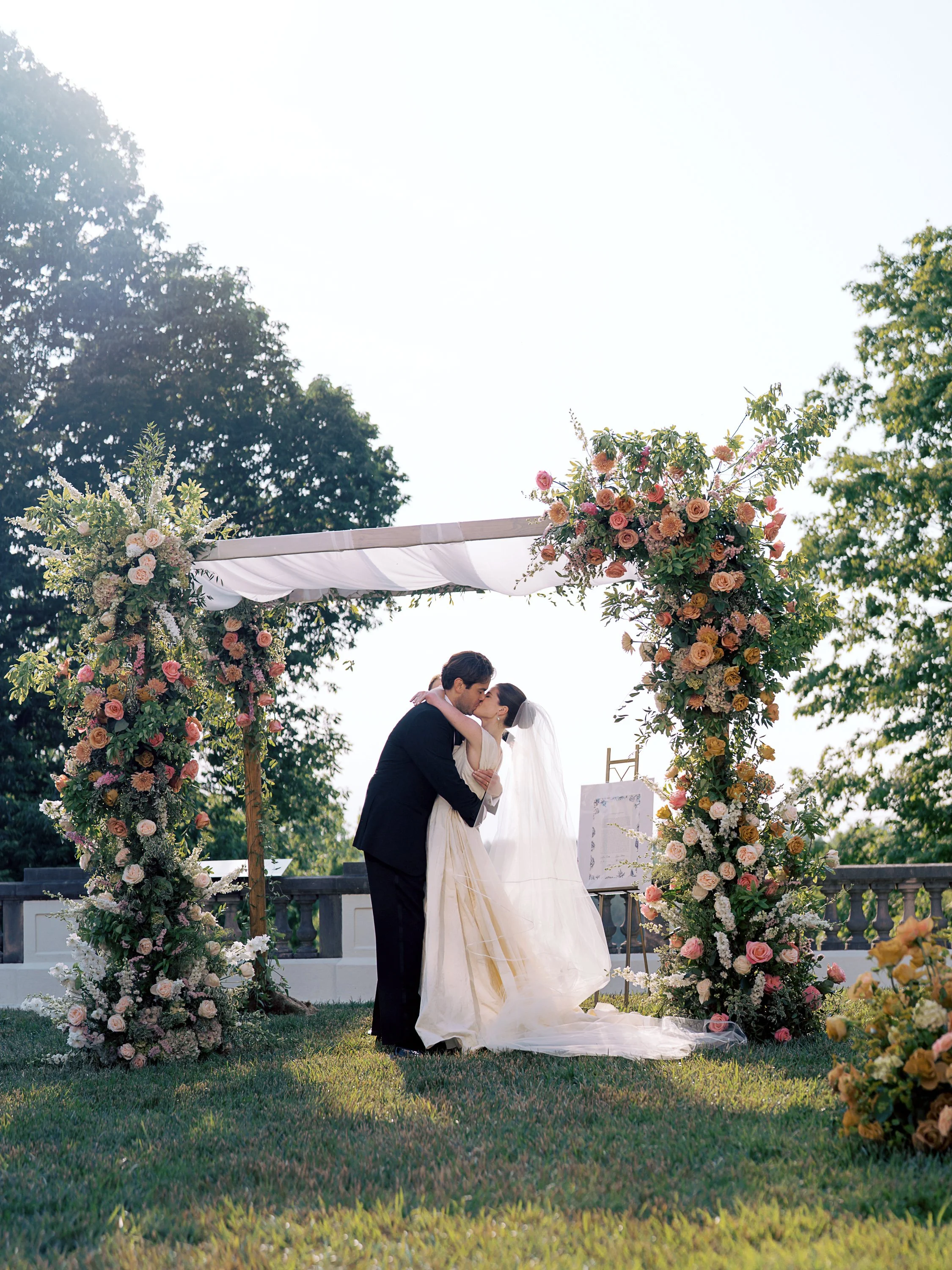
The Difference Between a Floral Estimate and a Floral Investment
Two florists, two very different numbers, and what you need to understand before choosing between them…
If you've started reaching out to wedding florists, you've likely already noticed: two studios can look nearly identical on Instagram and quote you wildly different numbers. One comes back at $4,500. Another at $14,000. You stare at both and wonder what you're supposed to do with that.
The short answer is that you're not comparing the same thing — even if both documents are labeled "estimate."
An Estimate Is Not a Design Proposal
An estimate is a projection. It gives you a ballpark built around line items: bridal bouquet, ceremony arch, centerpieces. Many florists send these before a real conversation has happened, which serves a purpose — it helps you quickly gauge whether someone is in range. The problem is when an estimate gets treated as a design proposal. It isn't.
A generic estimate tells you what something might cost. It doesn't tell you what your flowers will look like, how they'll feel in the space, or what the florist actually has in mind for your day.
A real investment proposal comes after dialogue. After understanding your venue, your aesthetic, your priorities. It reflects creative thought, not just a per-stem calculation.
What the Numbers Actually Include
When proposals look dramatically different, here's what's usually driving it:
Labor. A single ceremony installation can involve 8–12 hours of design and construction time — not counting sourcing, prep, and breakdown. Some florists price for this honestly. Others don't, and it shows.
Sourcing. Specialty, seasonal, and imported blooms are not the same product as what's available at a wholesale warehouse. Texture, petal quality, and longevity are all meaningfully different — and priced accordingly.
Expertise. A florist with a decade of fine art experience and international training is not priced the same as someone who recently completed a certification. This is true of any skilled trade.
How to Read a Proposal
When you receive a floral proposal, ask yourself: does this reflect my actual wedding? If you described a loose, garden-gathered aesthetic and the proposal mentions tight formal arrangements, something didn't translate. A proposal that could have been sent to anyone isn't a real proposal.
The best ones include design intent, not just flower names. You should be able to read it and picture something.
On Budget
The industry does couples a disservice by treating budget as an awkward topic. It's just information. When you share it honestly, a skilled florist can tell you clearly what's possible and where the tradeoffs are — more ceremony, simpler tables; less bouquet, more installation. These are real conversations, but only if both people know what you're working with.
At RK Florals, full-service weddings typically begin around $10,000. What that investment buys is not just beautiful flowers — it's design consultation, careful sourcing, expert installation, and a florist who has spent years learning how light and form and texture work together to produce something that feels like art rather than decoration.
An estimate tells you a number. An investment proposal tells you a story. When you receive one that genuinely reflects your wedding, you'll know the difference.